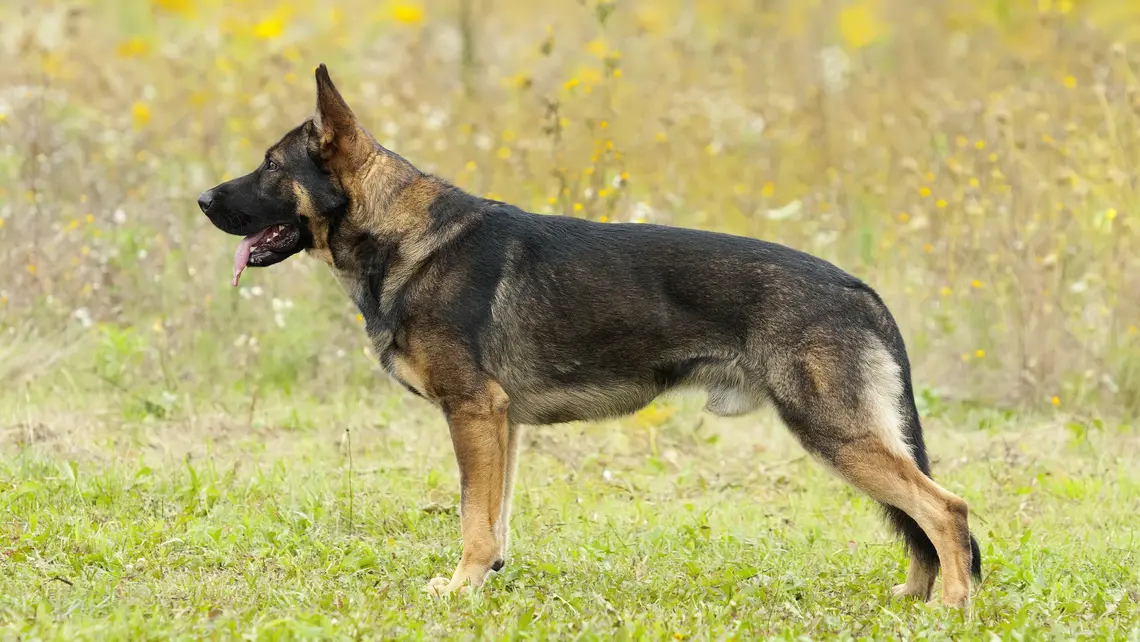
The German Shepherd Dog was created with one primary purpose: to be a capable, intelligent, and dependable working dog. Among the various bloodlines that developed over time, west German working line German Shepherds remain one of the closest representations of the breed’s original intent. Their history is defined by careful selection, performance testing, and a commitment to function over appearance.
The breed originated in Germany in the late 19th century, when breeders sought a versatile herding dog that could also excel in protection and service roles. Early German Shepherds were valued for their intelligence, endurance, and sound temperament. During this period, there was no separation between working and show dogs—every breeding decision was made with usefulness in mind.
Following World War II, Germany was divided, and breeding programs began to diverge. In West Germany, breeders continued to emphasize working ability and structural soundness. Dogs were required to meet strict standards before being approved for breeding, including temperament evaluations and performance testing. This system ensured that breeding stock possessed strong nerves, confidence, and the ability to perform under pressure.
Rather than focusing on exaggerated physical traits, West German breeders prioritized balanced structure and efficient movement. A correct body was one that could support demanding work over long periods without breaking down. Angulation, proportions, and gait were evaluated in terms of functionality, not visual extremes. This philosophy helped preserve the athleticism and durability that working German Shepherds are known for today.
Working trials played a significant role in shaping these bloodlines. Dogs were expected to demonstrate obedience, tracking ability, courage, and control. These evaluations reinforced mental stability and handler cooperation while maintaining strong working drives. Over time, this approach produced dogs that were intense when working but clear-headed and manageable in everyday environments.
As German Shepherds gained popularity worldwide, dogs from West German working programs became highly sought after. Their consistency and reliability made them ideal candidates for police, military, and sport applications. Many breeders outside Germany imported foundation dogs to establish their own programs, helping spread the influence of West German bloodlines internationally.
Throughout this expansion, the core breeding philosophy remained largely unchanged. West German working line German Shepherds continued to be selected based on performance, temperament, and structural efficiency rather than popularity or show success. This resistance to trends helped protect the functional integrity of the line, even as other branches of the breed evolved in different directions.
Today, these dogs are widely regarded as a cornerstone of serious working German Shepherd breeding. Their historical development explains why they are often described as confident, resilient, and versatile. The emphasis on balanced drives and sound structure has allowed them to excel in a wide range of roles while remaining stable companions.
The history of west German working line German Shepherds is ultimately a story of preservation. Through disciplined selection and a focus on real-world ability, breeders in West Germany maintained the qualities that defined the breed from its earliest days. This legacy continues to influence modern programs and serves as a benchmark for those who value authenticity and working excellence in the German Shepherd Dog.
More Articles
Protection Training vs. Sport Training: Why the Difference Matters
A dog racing across a field and gripping a bite sleeve can...Read more
History of Czech Working Line German Shepherds
Czech working line German Shepherds are widely recognized as some of the...Read more
Why East-European Shepherds Make Excellent Personal Protection and Guard Dogs
The East-European Shepherd (VEO) is widely recognized as one of the most...Read more
