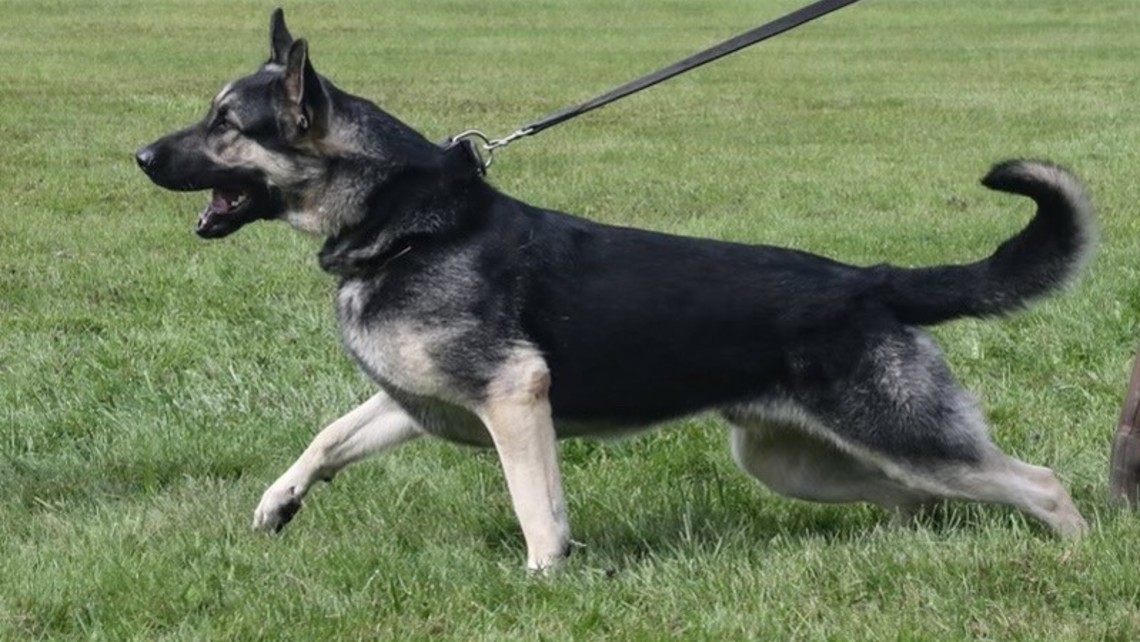
A dog racing across a field and gripping a bite sleeve can look impressive. But does that performance mean the dog is prepared to protect you and your family?
The answer depends on much more than the bite.
Protection training and protection sports share some exercises, equipment, and foundational skills. However, their goals differ. Sport training prepares a dog to perform within a defined competition framework. Real-life protection training should prepare a suitable dog to respond appropriately in everyday environments while remaining under control.
For anyone considering a personal or family protection dog, understanding this distinction is essential.
What Sport Training Demonstrates
Protection sports give handlers a structured way to develop and demonstrate their dogs’ abilities. In IGP, for example, the protection phase includes prescribed exercises assessed by a judge. Dogs are evaluated on qualities including confidence, commitment, gripping, guarding, and releasing. Obedience and control are important parts of the work. (fci.be)
These exercises require considerable training. A successful performance can demonstrate athleticism, drive, teamwork, and the ability to work under the demands of competition.
However, the result answers a specific question: how well did this dog perform the exercises required by that sport?
It does not, by itself, establish how the dog will respond to an unfamiliar confrontation involving its owner. A sport dog may have the qualities needed for protection work, but that suitability requires separate evaluation and preparation.
Real Life Does Not Follow a Competition Routine
An actual confrontation does not begin at a marked position or follow a judge’s instructions. The surroundings, timing, movement, and behaviour of the people involved may all be unfamiliar.
A dog accustomed to working in particular training contexts may respond differently beside a vehicle, inside a building, or in an unfamiliar outdoor location. Noise, restricted space, unusual surfaces, and nearby people can change the demands placed on the dog.
Real-life protection training should therefore develop reliability across varied, carefully managed scenarios. The aim is to help the dog apply its training beyond a familiar exercise.
This does not mean responsible protection training is uncontrolled. Both sport and practical protection training require safeguards, skilled trainers, and planned progression. The difference lies in the purpose of the exercises and how broadly the dog’s responses are evaluated.
Biting Equipment Is Only Part of the Picture
Bite sleeves and protective suits are training tools. Their presence does not automatically make a program sport training, and using different equipment does not automatically make it realistic.
The important question is what the dog has learned.
A dog may become highly enthusiastic about a familiar piece of equipment or a rehearsed sequence. That enthusiasm alone does not demonstrate readiness to protect a person outside that context.
Equally, it would be inaccurate to assume every sport dog is interested only in equipment or incapable of practical work. Dogs differ, and training backgrounds vary.
A credible protection program looks beyond an exciting demonstration. It evaluates the dog’s temperament, confidence, responsiveness, and ability to function when familiar training cues change.
Control Matters as Much as Commitment
A family protection dog must be manageable in ordinary life. Most of its time will be spent living with people and accompanying its owner.
Reliable obedience, the ability to disengage, and responsiveness to the handler are central to practical protection work. Control must remain meaningful when the dog is excited or distracted.
No dog should be treated as an infallible judge of human intentions. Responsible ownership includes supervision, sound handling, and preventing unnecessary confrontations. Protection training should support those responsibilities.
Temperament Comes Before the Demonstration
Not every dog is suited to personal protection work. Size, appearance, barking, or enthusiasm for biting cannot replace a suitable temperament.
At RMD East-European Shepherds, we value good nerves, confidence, and a strong relationship with the handler. These qualities matter because a protection dog must live successfully as a companion as well as perform demanding work.
Breed and pedigree can inform selection, but individual assessment remains essential. Even within working bloodlines, dogs differ in maturity, resilience, motivation, and suitability for a particular household.
The Owner Is Part of the Training
A demonstration with a professional trainer is only one part of assessing a protection dog. The intended owner must also learn to handle and manage that dog confidently.
This includes understanding commands, maintaining obedience, recognising changes in behaviour, and practising the skills needed for everyday life.
Training should continue after the dog enters its new home. A successful placement depends on the match between dog and household, the quality of owner instruction, and ongoing maintenance.
RMD’s Approach to Family Protection
At RMD East-European Shepherds, our focus is real-life training for real-life scenarios. We select the very best suitable puppies from our own breeding program and raise and train them for our protection program.
Our goal is a capable, stable companion whose training serves the practical needs of its family. That means looking beyond a powerful bite to consider temperament, obedience, adaptability, and the relationship between dog and owner.
Protection is not a game. For families considering a trained protection dog, the difference matters because impressive performance and practical preparation are not interchangeable.
Contact RMD East-European Shepherds to discuss our protection dog program and your family’s needs.
More Articles
History of Czech Working Line German Shepherds
Czech working line German Shepherds are widely recognized as some of the...Read more
Why East-European Shepherds Make Excellent Personal Protection and Guard Dogs
The East-European Shepherd (VEO) is widely recognized as one of the most...Read more
History of East German (DDR) German Shepherds
The history of DDR German Shepherds is closely tied to the political...Read more
